I was watching Barney Miller this morning, as is habit. And yes, I am aware it is no longer 1978. Whatever. My AM routine includes the local news, a cup of coffee, and an episode of the aforementioned sitcom featuring the antics of the men (and occasional women) of the 12th Precinct.
Thank you, Antenna TV, for your perpetual reruns of this great show.
Today’s episode made me laugh out loud. Wojo, Dietrich, and Yemana were marveling over “a phone without wires!” They thought it was the coolest thing ever, and couldn’t believe how advanced technology had become. Here they are, fawning over this thoroughly modern 20th-century engineering feat.
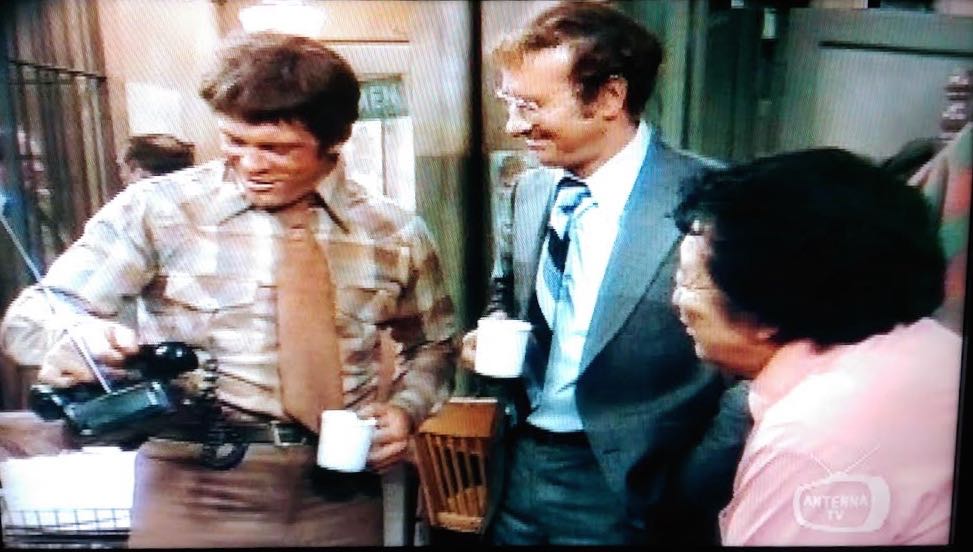
You think that’s something? Just wait, fellas.
And by the way, is this thing even real? Did such technology exist in the 70s? This is a regular ol’ telephone, minus the cord, with an antenna attached. And they were walking around the police station using it to make calls. According to my research (and by that I mean reading the “history of mobile phones” Wikipedia page), while the technology dates back to 1946, the first true handheld mobile phone was produced in 1973 and looked like the so-called “brick” we have all seen and laughed at in old photographs and movies. Hell, I was just joking about these primitive phones in my last post.
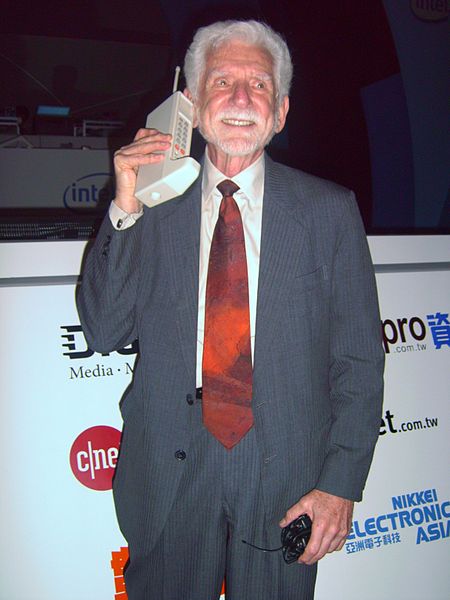
Which leads me to Conclusion A: Barney Miller took creative liberties with the whole “wireless phone” thing. Sure, they had existed for a few years by the time this episode originally aired, but I doubt anybody had ever actually seen one. And that leads inevitably to Conclusion B: Barney Miller was ahead of its time.
This got me thinking about other television shows that were ahead of their time, for one reason or another. These are not necessarily critically acclaimed shows that never found an audience (Pushing Daisies, Arrested Development) and may, in fact, have had long and successful runs – they just did things differently, or did them first. In addition to Barney Miller, which makes my list not just because of the futuristic look at mobile communications but also due to its forward-thinking, realistic depictions of homosexual relationships, I offer you the following (in no particular order).
- Star Trek. In 1968, this sci-fi classic boldly went where no man had before, at least on primetime television, and broke the color barrier by featuring an interracial kiss between Captain Kirk and Uhura. Despite occasional missteps (tribbles, anyone?), the franchise continues to live long and prosper.
- My So-Called Life. This short-lived drama became a cult classic and launched the careers of Claire Danes and Jared Leto. Though its main characters were high school students – nothing original there – their daily struggles with realistic hot-button social issues of the day were far more realistic than those experienced by their peers in the 90210 zip code who were more concerned with saving The Peach Pit.
- The Honeymooners. The Kramdens were the antithesis of all those other cheerful, well-dressed couples featured so prominently in the early days of television: they argued, they got into ill-advised schemes, and they were decidedly blue collar. All was not domestic bliss, but at the end of the day, you never doubted Ralph’s sincerity when he said to Alice, “baby, you’re the greatest.”
- Seinfeld. No other show spotlighted the flaws and idiosyncrasies of its main characters so perfectly. It succeeded in making a group of whiny, apathetic, self-absorbed New Yorkers likable, no small feat. Let’s not forget all the great catchphrases (yada-yada, spongeworthy, master of your domain). But the most compelling reason for being ahead of its time: in one episode, Elaine is dating a guy with the same name as a serial killer. She is flipping through Sports Illustrated and suggests he change his name to O.J. This episode aired seven months before Nicole Simpson was murdered.
- Lost. Love it or loathe it, odds are you talked about it (and those conversations inevitably contained the phrase “WTF?!”). This head-scratcher heaped layer upon layer of unresolved mystery upon you and the whole thing was a mishmash of unconventional plots that included time travel, flashbacks, flash-forwards, obscure references to 18th-century philosophers, and polar bears on desert islands. It never made much sense and the finale was infuriatingly dense, but it was completely original and strangely engrossing. Networks are still trying to come up with the next Lost, years after it went off the air.
That’s my list! What television shows would you consider groundbreaking or ahead of their time?





 Mark My Words
Leave a reply to Mark Petruska Cancel reply