I continue to learn new things about the publishing industry every day. Like the existence of widows and orphans.
We are in the midst of wrapping up the winter edition of our parenting magazine this week, which translates to lots of proofing and editing before we send it off to the printer. My supervisor Slacked me some instructions this morning, one of which entailed “getting rid of the widow on page 12.”
What nefarious black deed is she asking me to perform?! I wondered. My mind raced as I tried to figure out whether she was honestly suggesting we put out a hit on some poor old lady still grieving over the loss of her husband. This was absurd, but as a confessed Dateline junkie, I’m jaded enough to know that even the most seemingly ordinary people are capable of crossing the line.
Well, spoiler alert: I was reading that way too literally. Widows, it turns out, are single words at the end of paragraphs. Separated from the rest of the text, they are all alone, adrift in a sea of white. Widows draw attention to all that empty space and interfere with eye movement across lines, drawing the ire of editors and graphic designers worldwide.
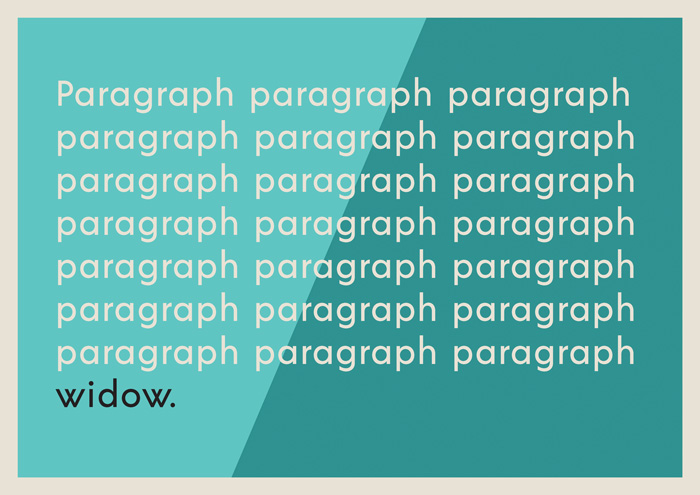
Things could have been worse. I might have been asked to “kill the orphan” instead. As you may have surmised, this has nothing to do with a child whose parents have died, but refers instead to a similar publishing faux pas: a paragraph-opening line that appears by itself at the bottom of a page or column, separated from the rest of the text.
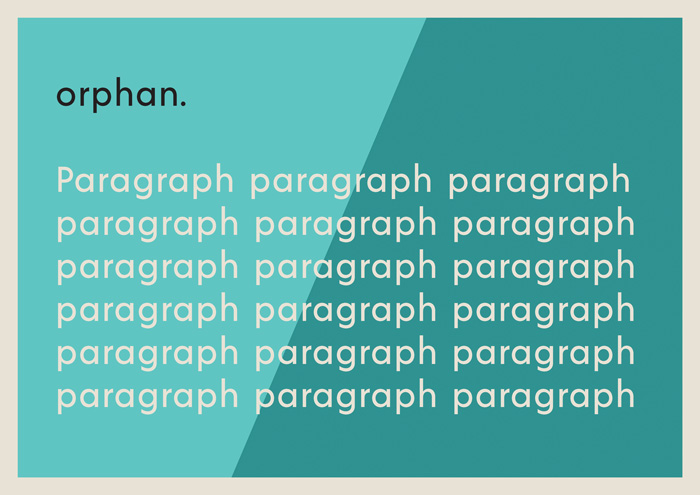
Widows and orphans are so despised, there’s even a handy little trick for remembering them: widows have a past but no future, orphans have a future but no past. Which seems unbearably sad and tragic, and yet…okay…oddly helpful.
Maybe, being a writer and editor for a publishing company—and a grammar nerd on top of that—I should have known about these terms instead of taking my supervisor so literally.
At least I am well-versed enough to know that “bleed” refers to printing that goes beyond the trim size of the page and not, you know…actual blood. Which, given my penchant for Dateline, is kind of surprising.




 Mark My Words
Leave a reply to Writer of words Cancel reply