The good news: we had a great weekend at the coast. The weather was perfect, we did a whole lot of lounging, ate some delicious seafood, and even spotted whales offshore.
The bad news: I gave myself a headache trying to figure out this whole “tides” thing.
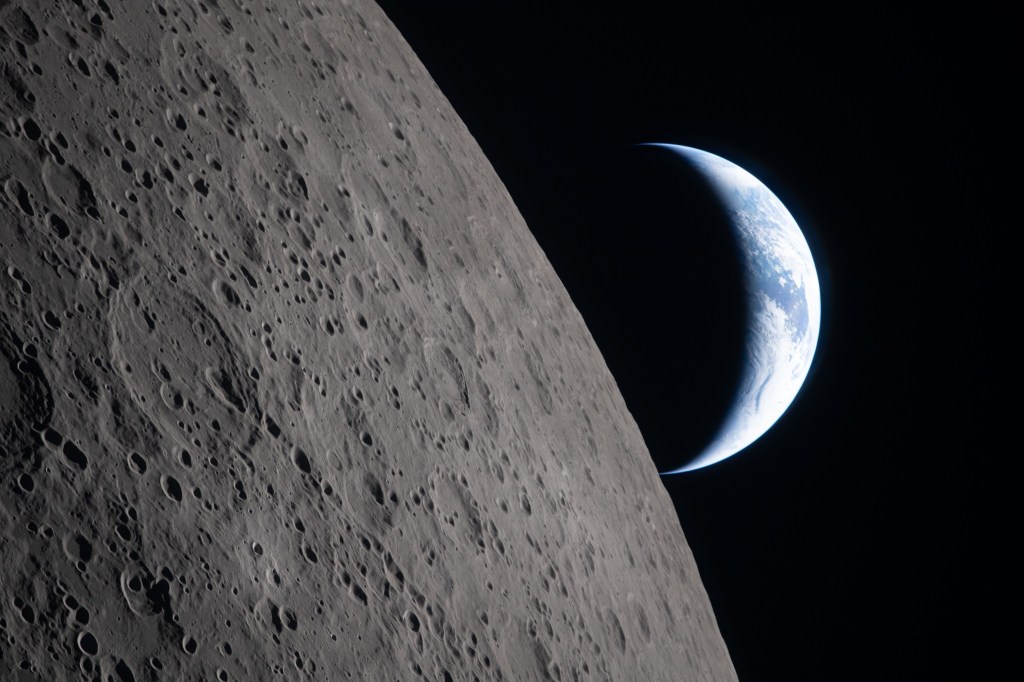
I’d never really thought about it before. High tide, low tide, the work of the moon’s gravitational pull, blah blah blah. I just accepted it, the same way I accept the fact that heavy aircraft made of metal can somehow defy gravity and carry people across the ocean, mostly without incident, and that Pat Sajak looks exactly the same today as he did in 1990.
P L S T C S U R E R Y
I’d like a “G” please.

Anyway, like I said, I never gave much thought to the tides. Until this visit. I was curious about when high tide would roll in, so I pulled up a tidal chart online and immediately had my answer. 6:29 AM. 8.6 feet. Gotcha, thanks.
But then I started wondering, how can people know what time the second low tide occurs on, say, November 18? And what the measurement will be? (3:38 PM, 1.4 feet). I realize there are complex mathematical formulas involved, and that immediately makes my eyes glaze over, but I was curious, dammit. So I started researching. Turns out there are gravitational and centrifugal forces at work, involving both the moon (68.5% of the time) and the sun (31.5% of the time); and because the relative positions of the earth, sun, and moon change during the month, sometimes the gravitational pull of the sun and moon reinforce one another, causing higher tides, and other times they cancel each other out, causing lower tides. Some places (the Pacific Ocean) have semidiurnal mixed tides, two high tides and two low tides of unequal size each day; our friends on the Atlantic experience semidiurnal tides, two a day that are equal in height; and if you come from the land Down Under where women glow and men plunder, you get diurnal tides – that is, one high and one low per day. The mathematical formula for all this (if you want to try predicting tides at home just for fun, kids) is:
A·[1 + Aa·cos(wa ·t + pa)]·cos(w·t + p).
Add in factors like ocean currents and storm surges and land masses and ocean floor topography and…hello, migraine! Sheesh. After reading all this, I’m even more confused over how we know what time high tide occurs on Rosh Hashanah (1:33 AM and again at 1:40 PM).
I’ll stick with solving Wheel of Fortune puzzles, thank you very much.
In house-for-sale news, our official MLS listing went up online yesterday. I shared it on Facebook, because…well, why not? Maybe a local friend has a local friend who has a local friend who is thinking of buying a house. It’s worth a shot, anyway. But several people commented they “felt weird” about looking at our house. One said it made her feel like “a peeping Tom.” I was a little surprised by this reaction. I mean, while the pictures show our house as is – lava lamps on the bookshelves, papers on the desk – it’s not like we have dirty socks strewn about the living room or bras hanging from the shower curtain rod. I assert that the video tour shows a “home” rather than a “house,” and that’s a good thing. And I love how our realtor describes certain components of the home. Like, the living room features “decorator colors.” Really, I just slapped some orange paint on the walls six years ago. And there is an “extra room” in the master bedroom, “perfect for an office space or dressing area.” I think calling the tiny alcove where I shoved a desk an extra room is being a tad generous, but if it’ll help the place sell, knock yourself out. Oddly enough, there was no mention originally of the vaulted ceilings upstairs, extra tall nine-foot ceilings (“perfect for basketball players”?), or central air-conditioning…all of which I consider key selling features. I quickly had her correct the listing. Also, because our fireplace is a crappy direct-vent style that has never worked properly, I told her to downplay that. Naturally, the online listing boasts of a “gas fireplace for winter comfort.” I don’t know whether to laugh or cry.
I guess that depends on whether the hyperbole works.

Related articles





 Mark My Words
Leave a reply to hanimal Cancel reply